

bxijxx.over-blog.com/
17 Décembre 2020

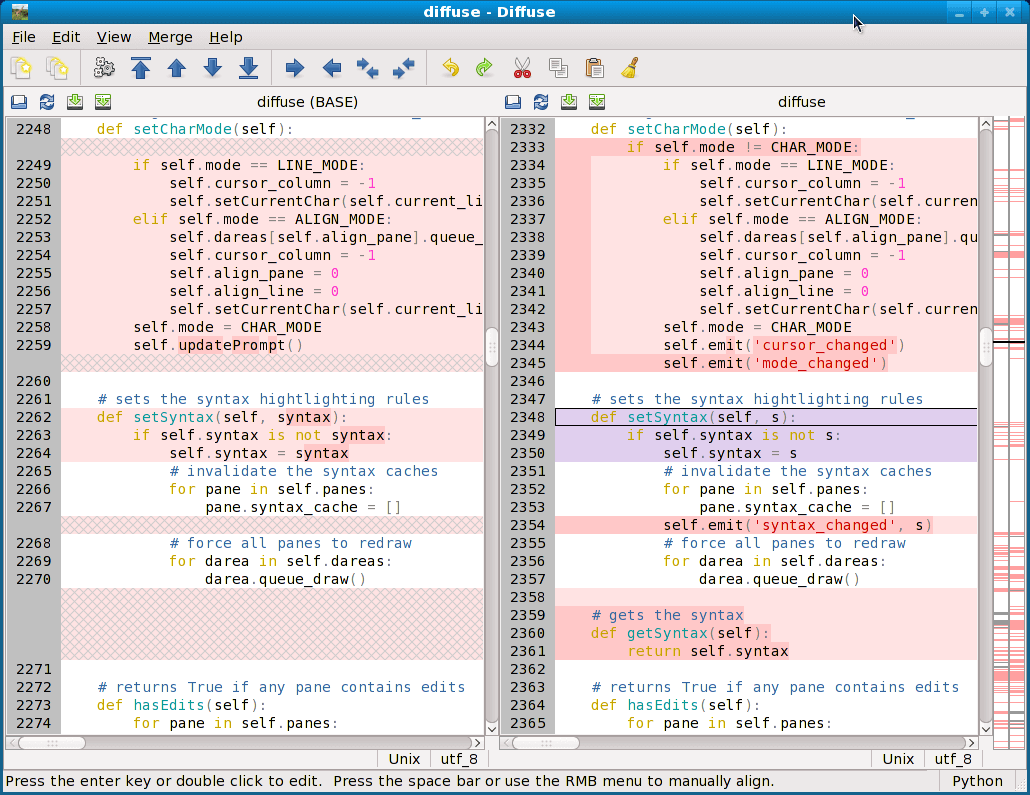
$ diff bar/ foo/ && echo 'The directories' contents are identical' That will show you the different files, if any, or print 'The directories' contents are identical' if they are. To compare subdirectories and any files they may contain as well, use diff -r. Combine it with -q to suppress the output for text files. Meld is a visual diff and merge tool targeted at developers. Meld helps you compare files, directories, and version controlled projects. It provides two- and three-way comparison of both files and directories, and has support for many popular version control systems. Meld helps you review code changes and understand patches.
Systems programmers need a hex editor frequently. Here are some options:
Verification of the Monero binary files should be done prior to extracting, installing, or using the Monero software. This is the only way to ensure that you are using the official Monero software. If you receive a fake Monero binary (eg. phishing, MITM, etc.), following this guide will protect you from being tricked into using it.
To protect the integrity of the binaries the Monero team provides a cryptographically signed list of all the SHA256 hashes. If your downloaded binary has been tampered with it will be produce a different hash than the one in the file.
This is an advanced guide for Linux, Mac, or Windows operating systems and will make use of the command line. It will walk you through the process of installing the required software, importing the signing key, downloading the necessary files, and finally verifying that your binary is authentic.
On Windows, go to the Gpg4win download page and follow the instructions for installation.
On Mac, go to the Gpgtools download page and follow the instructions for installation.
On Linux, GnuPG is installed by default.
This section will cover getting the Monero signing key, making sure it is correct, and importing the key to GnuPG.
On Windows or Mac, go to binaryFate's GPG key, which he uses to sign the Monero binaries, and save the page as binaryfate.asc to your home directory.
On Linux, you can download binaryFate's signing key by issuing the following command:
On all operating systems, check the fingerprint of binaryfate.asc by issuing the following command in a terminal:
Verify the fingerprint matches:
If the fingerprint DOES match, then you may proceed.
If the fingerprint DOES NOT match, DO NOT CONTINUE. Instead delete the file binaryfate.asc and go back to section 2.1.
From a terminal, import the signing key:
If this is the first time you have imported the key, the output will look like this:
If you have imported the key previously, the output will look like this:
This section will cover downloading the hash file and verifying its authenticity.
On Windows or Mac, go to the hashes file on getmonero.org and save the page as hashes.txt to your home directory.
On Linux, you can download the signed hashes file by issuing the following command: https://truebfil760.weebly.com/reel-em-in-slot-machine-app.html.
The hash file is signed with key 81AC 591F E9C4 B65C 5806 AFC3 F0AF 4D46 2A0B DF92 Usb wireless keyboard mac. , as reflected in the output below.
On all operating systems, verify the signature of the hash file by issuing the following command in a terminal:
If the file is authentic, the output will look like this:
If your output shows Good signature, as in the example, then you may proceed.
If you see BAD signature in the output, DO NOT CONTINUE. Instead delete the file hashes.txt and go back to section 3.1.
This section will cover downloading the Monero binary for your operating system, getting the SHA256 hash of your download, and verifying that it is correct.
On Windows or Mac, go to getmonero.org and download the correct file for your operating system. Save the file to your home directory. Do not extract the files yet.
On Linux, you can download the command line tools by issuing the following command:
The steps for both Linux and Mac are the same. From a terminal, get the SHA256 hash of your downloaded Monero binary. As an example this guide will use the Linux, 64bit GUI binary. Substitute monero-gui-linux-x64-v0.15.0.1.tar.bz2 with the name of the binary that you downloaded in section 4.1. https://downyfiles254.weebly.com/switch-screen-macbook-pro.html.
The output will look like this, but will be different for each binary file. Your SHA256 hash should match the one listed in the hashes.txt file for your binary file.
If your hash DOES match, then you are finished with the guide! You can extract the files and install.
If your hash DOES NOT match, DO NOT CONTINUE. Instead delete the binary you downloaded and go back to section 4.1.
From a terminal, get the SHA256 hash of your downloaded Monero binary. As an example this guide will use the Windows, 64bit GUI binary. Substitute monero-gui-win-x64-v0.15.0.1.zip with the name of the binary that you downloaded in section 4.1.
The output will look like this, but will be different for each binary file. Your SHA256 hash should match the one listed in the hashes.txt file for your binary file.
If your hash DOES match, then you are finished with the guide! You can extract the files and install.
If your hash DOES NOT match, DO NOT CONTINUE. Instead delete the binary you downloaded and go back to section 4.1.


/image%2F6202623%2F20210221%2Fob_621f15_air-guard-game-full-version.jpeg)
/image%2F6202623%2F20210221%2Fob_111c42_soul-tree-toshinobu-kubota-rar-file.jpeg)
/image%2F6202623%2F20210221%2Fob_664ff6_outlook-2016-mac-property-is-not-valid.jpeg)
/image%2F6202623%2F20210221%2Fob_782330_mario-level-editor-for-mac.jpeg)